
The idea of the term #Blakward came to a few years ago. Since then, what it was going to be has taken on many forms through countless ideas and frustrations, doubts, revisions and all the other manic emotions you can think of. When I was trying to mold my idea into something that is absolutely was not, it was painstaking; I put it down probably just as many times as I picked it up. That was then…”now,” however, this is a cathartic, much needed work of art, politics, and culture. Join me as we go and grow #onward&blakward!
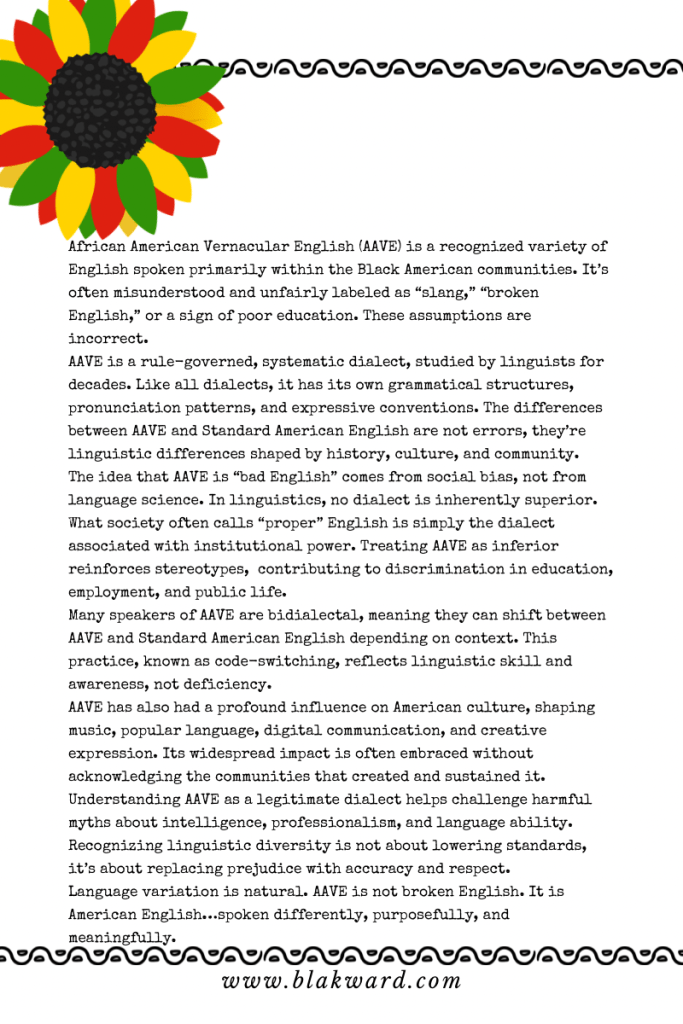
AAVE
In honor of the 100 year anniversary of Black History Month, I want to give a head nod to AAVE, though I prefer the term Ebonics.
WAISTED
Waist Beads: History, Spirit, and Sacred Continuity in African & African American Culture
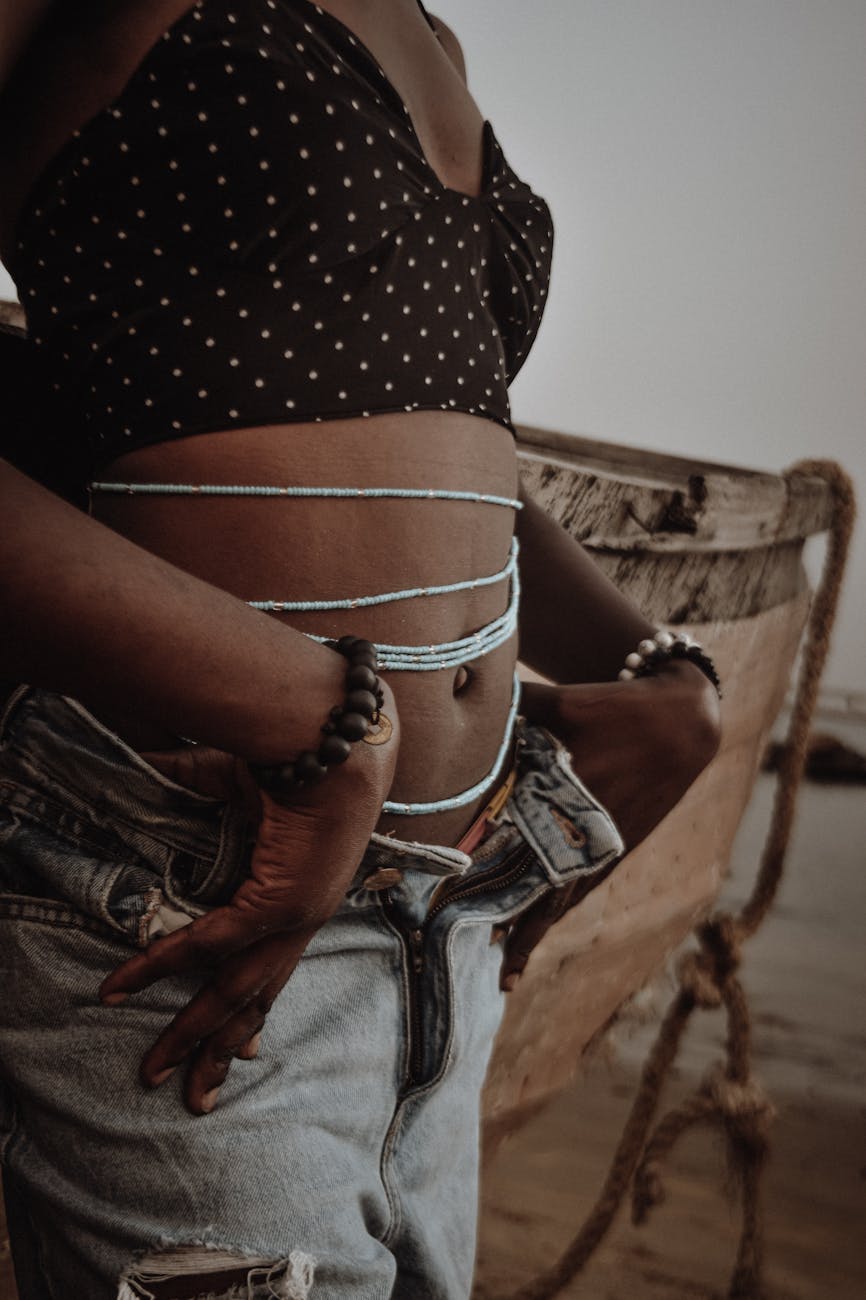
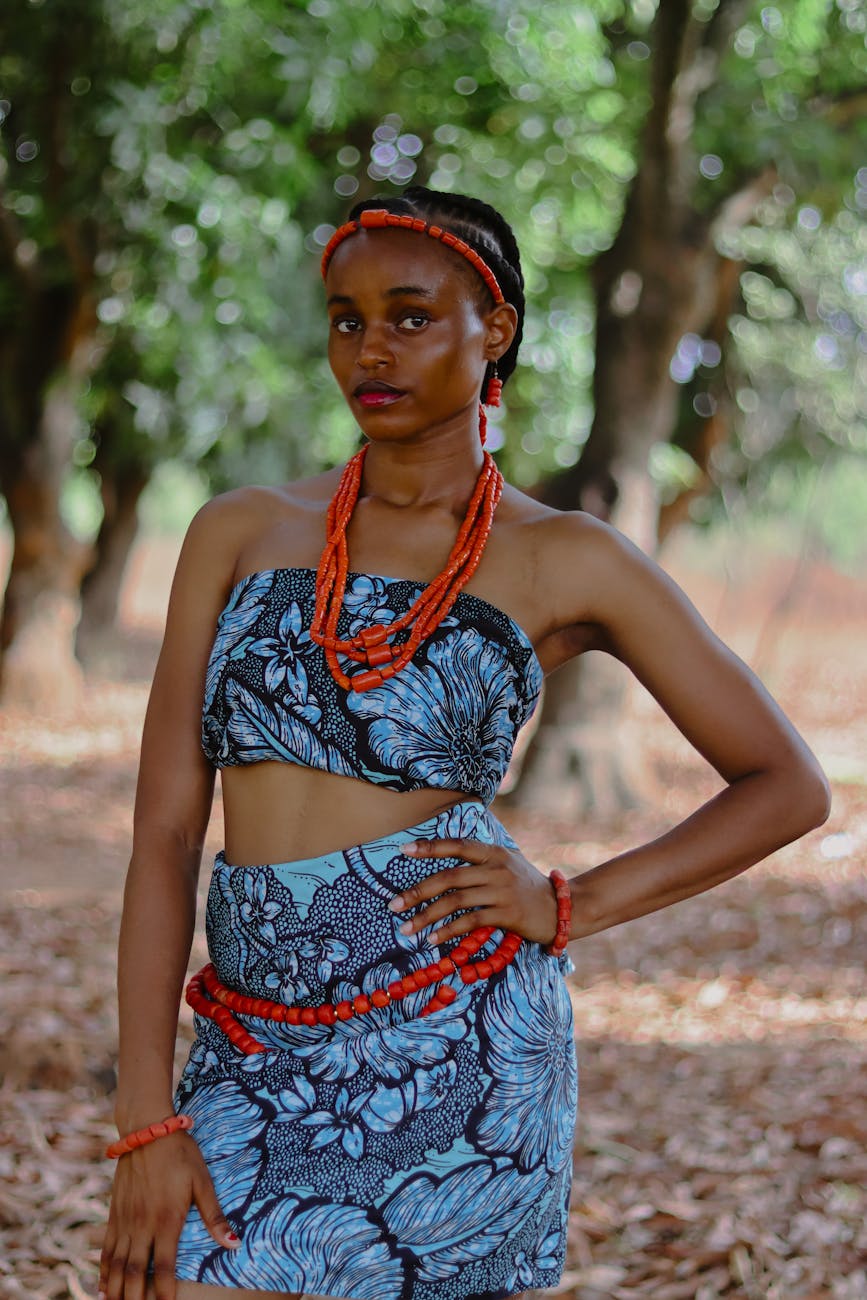
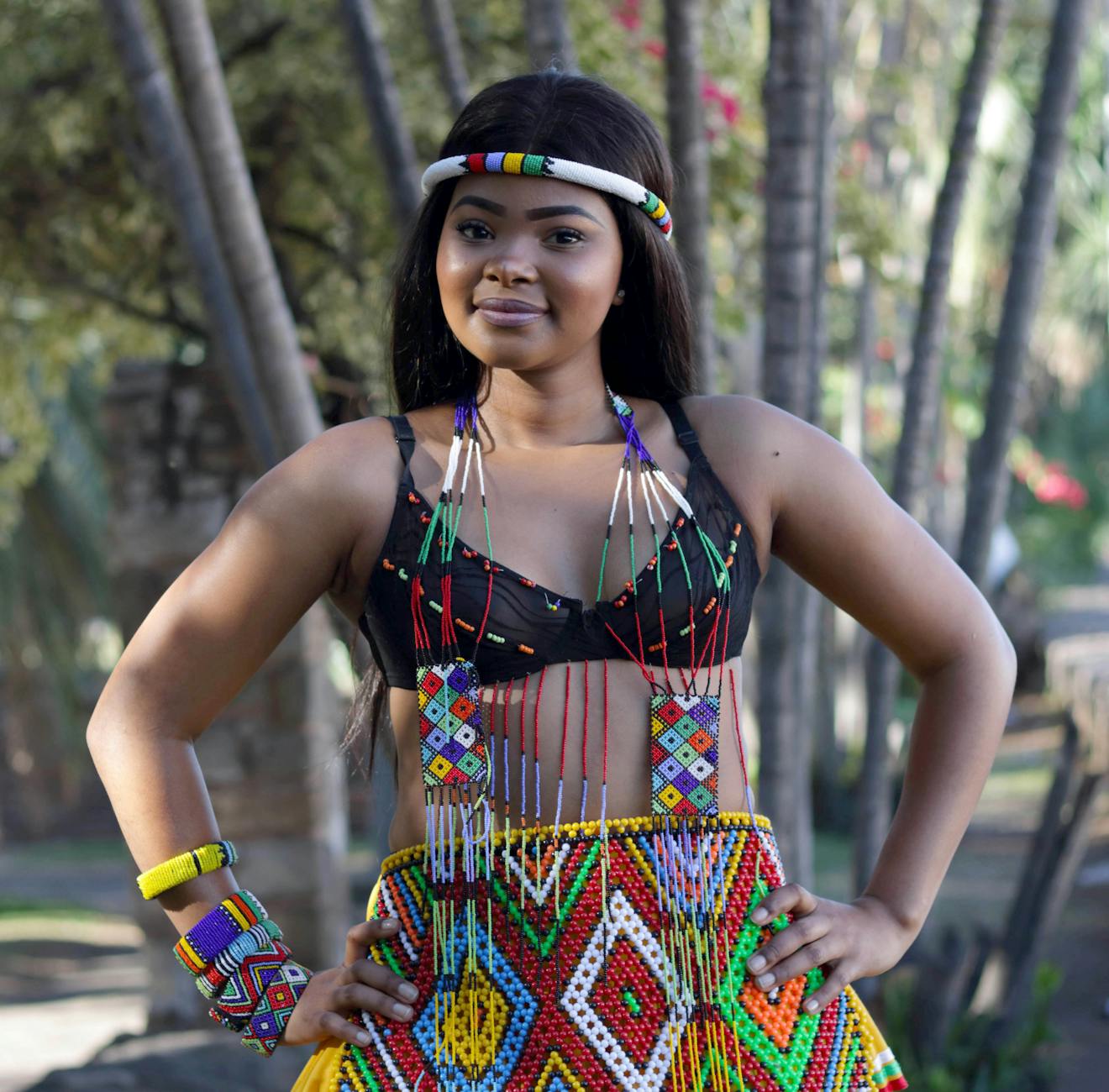
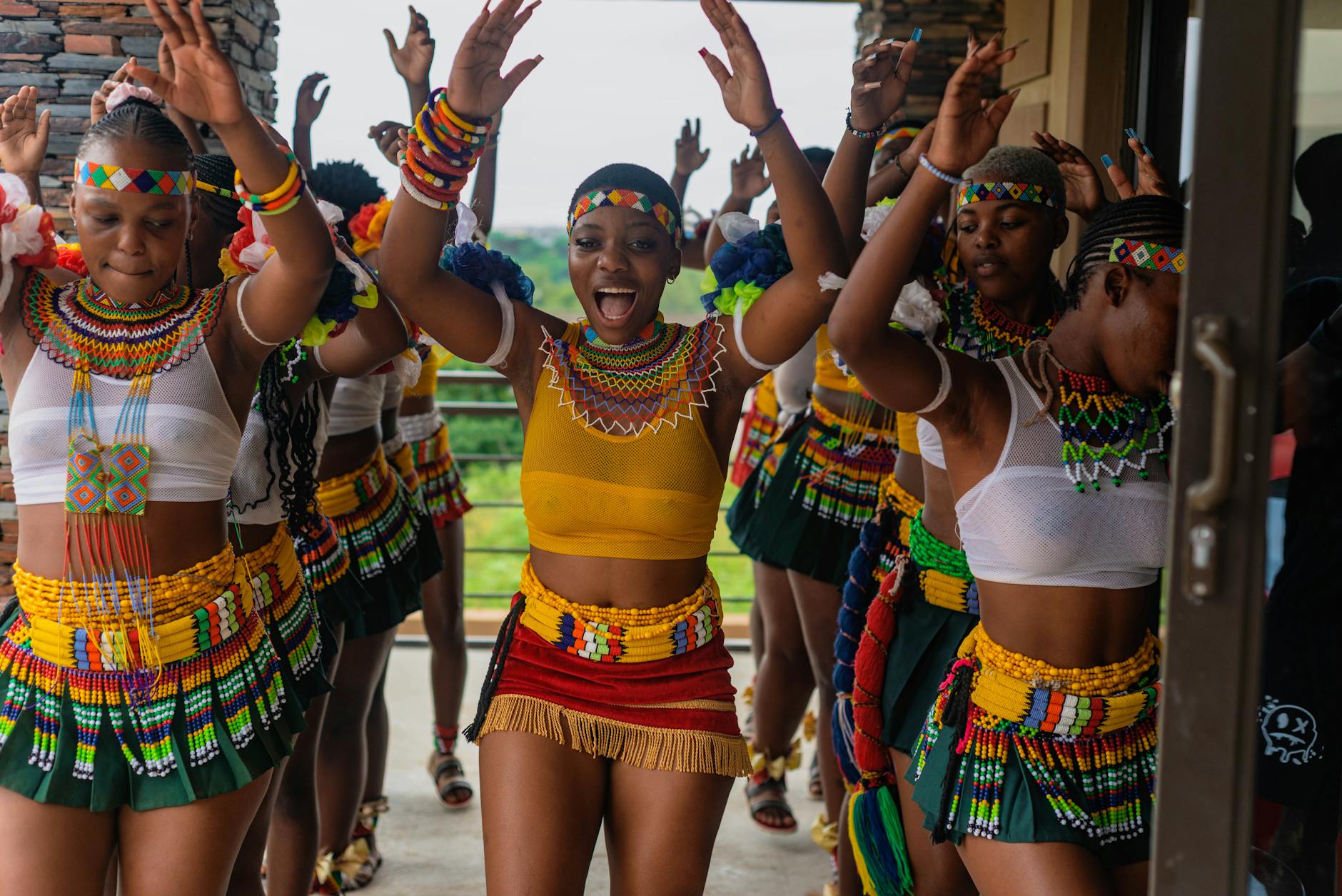
Waist beads are far more than adornment. Across Africa and throughout the African diaspora, they function as spiritual tools, cultural markers, and living vessels of ancestral veneration. Their history is deeply intertwined with ritual, identity, protection, and power.
This post explores the historical origins, spiritual and ritual significance, role in Hoodoo and African American culture, and traditional color meanings of waist beads—centering their sacred essence rather than reducing them to just merely a fashion trend.
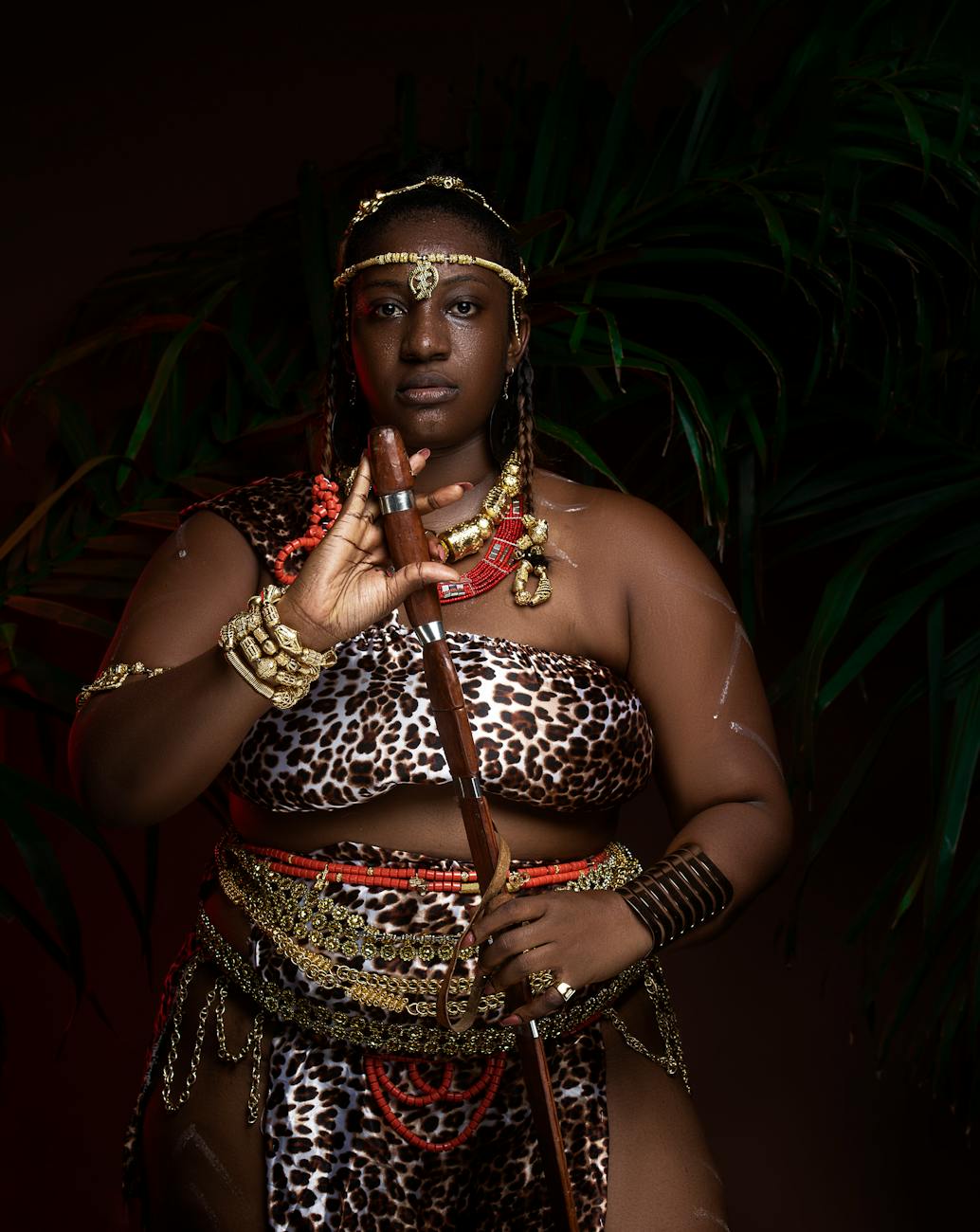
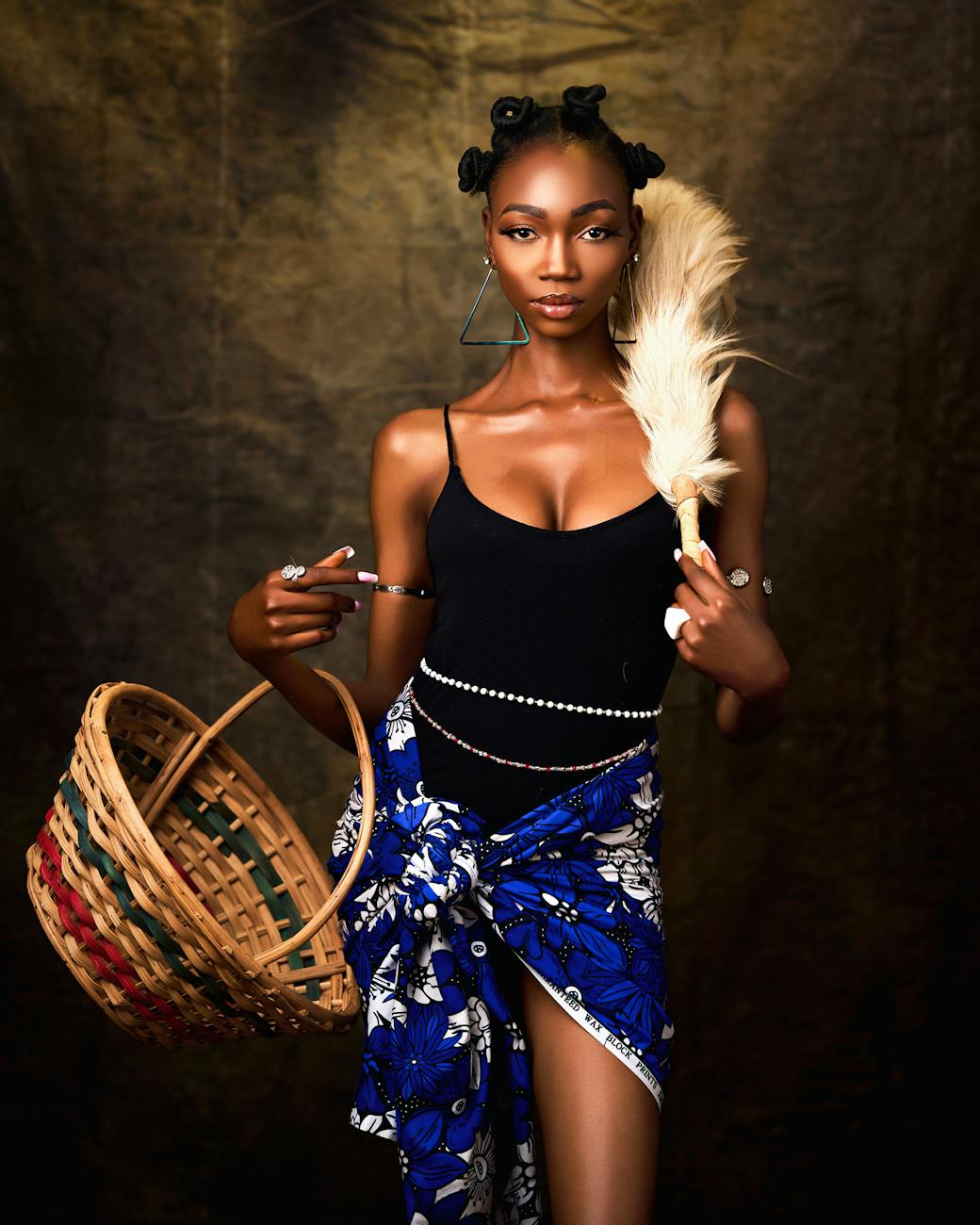
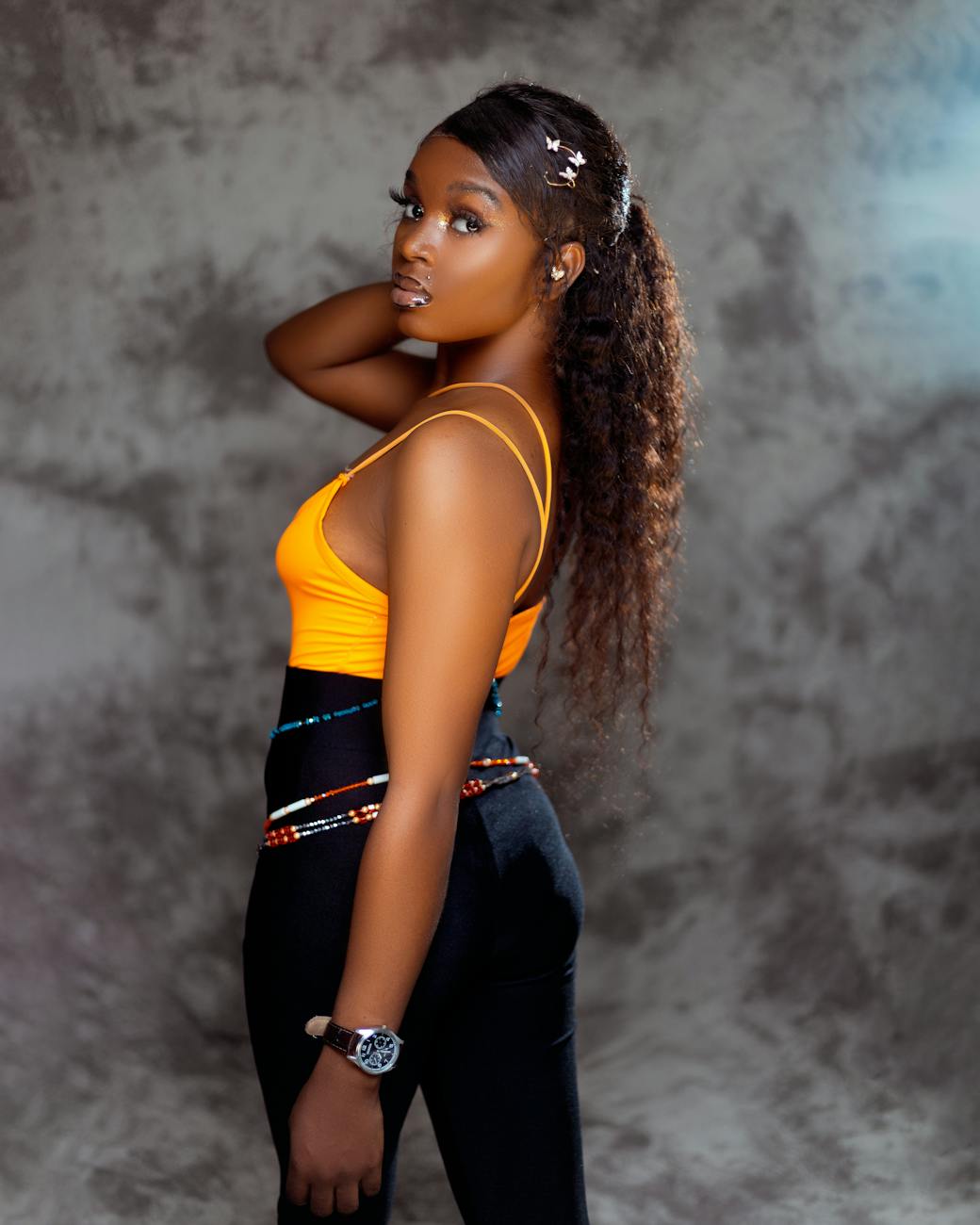
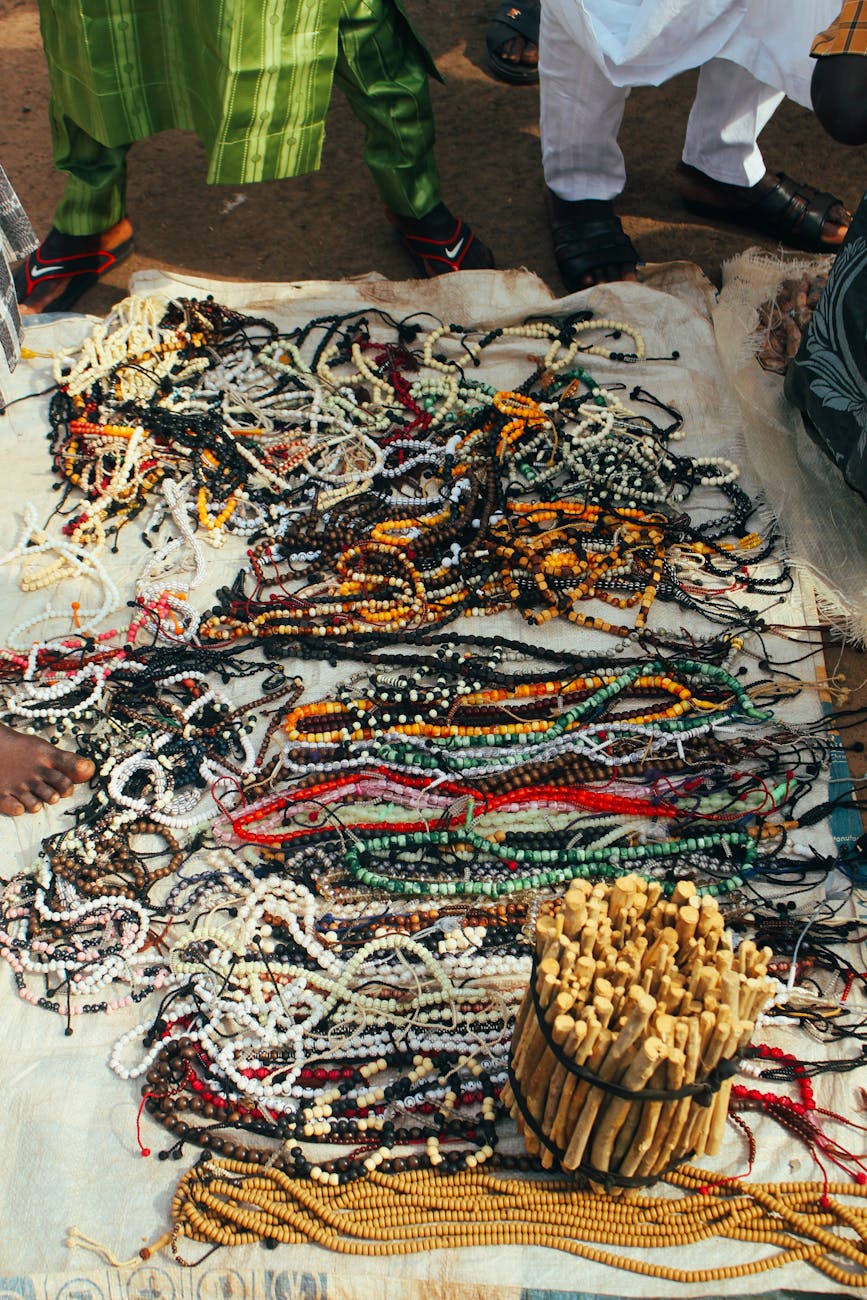
Origins of Waist Beads in African Culture
Waist beads have been worn for thousands of years across Africa, particularly in West, Central, and East African societies. Archaeological evidence suggests their presence as early as ancient Nile Valley civilizations, later spreading and evolving among various ethnic groups.
Traditionally, waist beads were crafted from:
- Glass beads
- Clay
- Bone
- Shells
- Seeds
- Metals
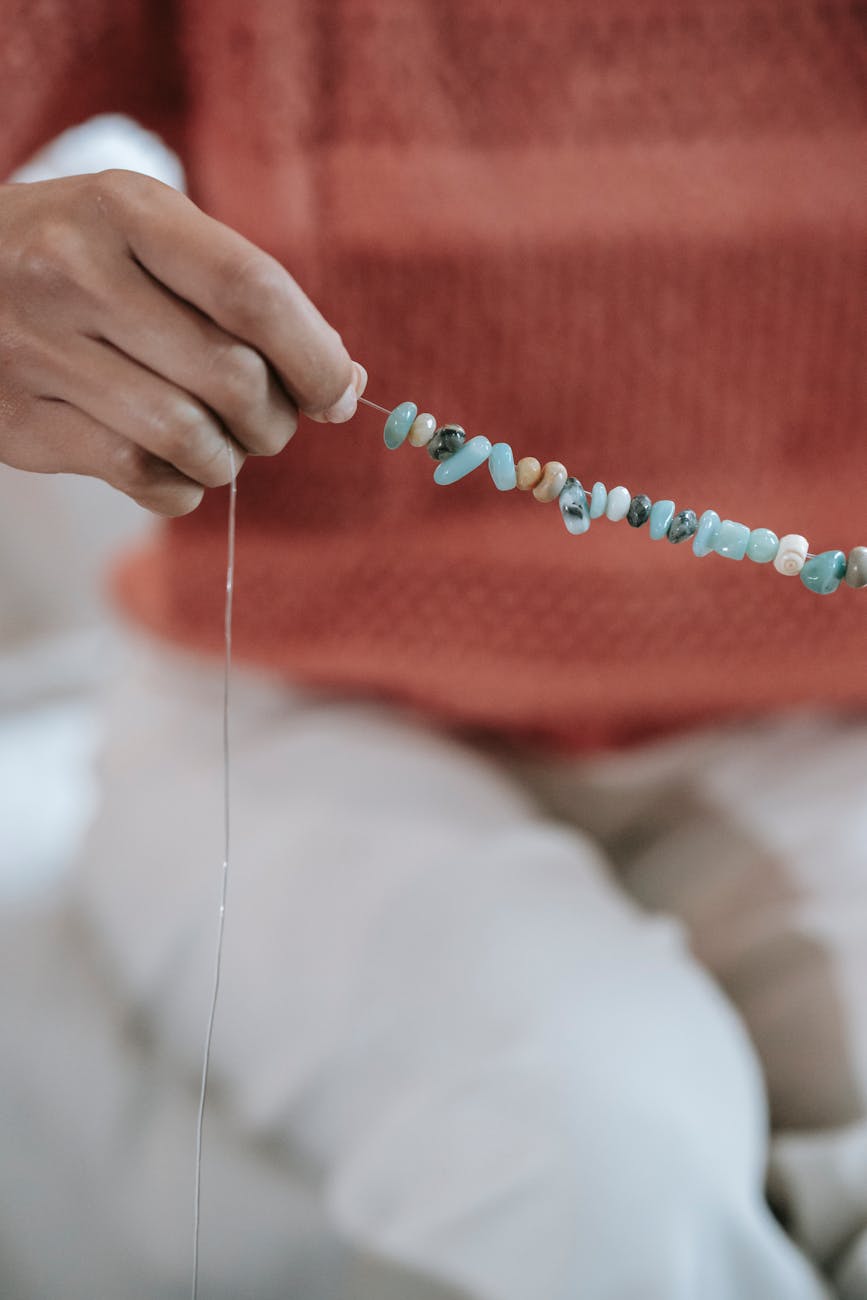
They were often handmade by elders, spiritual workers, or bead makers who understood the energetic properties of color, material, and intention.
Waist beads served as:
- Markers of life stages (birth, puberty, marriage, motherhood, elderhood)
- Indicators of social status or lineage
- Tools for spiritual protection
- Objects of ritual empowerment
Spiritual and Ritual Significance
Spiritually, waist beads operate as energy anchors, ornamented across the waist, as a powerful energetic center tied to:
- Creativity
- Sexual energy
- Life force
- Ancestral memory
- Manifestation
In many African traditions, waist beads are:
- Consecrated or prayed over
- Worn during rituals
- Used in fertility, protection, and grounding work
- Charged with herbs, oils, smoke, or intention
Some were meant to be worn permanently, others only during specific ceremonies or spiritual seasons. The breaking or removal of waist beads could signify transition, completion of a ritual cycle, or spiritual release.
Waist Beads in Hoodoo & African American Spiritual Practice
During enslavement, Africans carried their spiritual systems with them, often hidden, reshaped, and preserved under oppressive conditions. Waist beads survived this rupture, transforming within African American culture and Hoodoo traditions.
In African diaspora folk magick, waist beads have been used as:
- Protective charms against spiritual attack
- Containers for rootwork
- Body-based talismans for attraction, luck, or strength
- Links to ancestral connection
They were sometimes paired with:
- Roots
- Psalms
- Oils
- Personal prayers
- Graveyard dirt or spiritual baths
Because Hoodoo emphasizes practical spirituality, waist beads functioned as wearable magic: always present…always working…always one with the body.
Even when materials were scarce, evidence proves that African diasporic slaves recreated waist beads using thread, string, or repurposed beads, proving that the power was never in luxury but in intention and lineage.
Waist Beads in African American Culture Today
In contemporary African American culture, waist beads remain symbols of:
- Cultural memory
- Spiritual reclamation
- Embodied ancestry
- Personal sovereignty
For many African Americans today, wearing waist beads is an act of reconnection to traditions that were once suppressed, mocked, or erased. They represent continuity: a reminder that African spiritual technologies did not disappear…they adapted.
Traditional Waist Bead Color Meanings
Colors in waist beads are never arbitrary. Below are commonly recognized meanings across African and diasporic traditions (meanings may vary slightly by region and lineage):
🔴 Red
- Life force
- Blood, vitality
- Protection
- Power
- Sexual energy
- Spiritual strength
⚪ White
- Purity
- Ancestral connection
- Peace
- Spiritual clarity
- Protection
- Truth
⚫ Black
- Protection
- Mystery
- Absorption of negativity
- Ancestral wisdom
- Strength
🟡 Yellow / Gold
- Wealth
- Abundance
- Joy
- Solar energy
- Divine favor
🟢 Green
- Growth
- Fertility
- Healing
- Earth energy
- Prosperity
🔵 Blue
- Calm
- Emotional balance
- Communication
- Spiritual protection
- Water energy
🟣 Purple
- Spiritual authority
- Royalty
- Intuition
- Psychic power
- Divine connection
🟠 Orange
- Creativity
- Attraction
- Confidence
- Vitality
🟤 Brown
- Grounding
- Stability
- Connection to land and ancestors
⚪⚫ White & Black (Combination)
- Balance between spiritual and physical worlds
- Protection with clarity
- Ancestral harmony
🔴⚫ Red & Black
- Strong protection
- Power and resilience
- Spiritual defense
🟡🟢 Gold & Green
- Abundance rooted in growth
- Prosperity through effort
Waist Beads as Living Tradition
Waist beads are not relics of the past. They are living spiritual tools, continuously evolving while remaining deeply rooted in African cosmology and African American spiritual survival.
They remind us that the body itself is sacred and that ancestral knowledge does not vanish when oppressed. It waits. It adapts. It returns.
Adorn Yourself.
References & Further Reading
(Black authors only)
- Asante, Molefi Kete. The Cultural Unity of Black Africa. Africa World Press.
- Ben-Jochannan, Yosef A. A. African Origins of the Major Western Religions. Black Classic Press.
- Brown, Ras Michael. African-Atlantic Cultures and the South Carolina Lowcountry. Cambridge University Press.
- Hurston, Zora Neale. Mules and Men. Harper Perennial.
- Karenga, Maulana. Introduction to Black Studies. University of Sankore Press.
- Mbiti, John S. African Religions and Philosophy. Heinemann.
- Stuckey, Sterling. Slave Culture: Nationalist Theory and the Foundations of Black America. Oxford University Press.
- Thompson, Robert Farris. Flash of the Spirit: African and Afro-American Art and Philosophy. Vintage Books.
- Washington, Yvonne P. African American Roots, Rituals, and Spirituality. University Press of America.
- Oral histories, spiritual lineages, and cultural knowledge preserved through African American Hoodoo, rootwork, and ancestral practices.
Here are some affirmations and corresponding mantras for the Divine Feminine and the Dark Feminine:
🌸 Affirmation for the Divine Feminine
“I call forth the divine feminine within me—
the creator, the nurturer, the life-giver, the vessel of wisdom.
As I wear these waist beads, I align with grace, intuition, and ancestral remembrance.
I move in harmony with my cycles, my power, and my sacred knowing.
I am divine. I am guided. I am in communion with my highest feminine self.”
🌸 Divine Feminine Mantra
“I embody divine feminine wisdom.
I move in grace, power, and alignment.”
🌑 Affirmation for the Dark Feminine
“I awaken the dark feminine within me—
the protector, the boundary keeper, the untamed truth.
As these waist beads embrace my body, they hold my power, my rage, my desire, and my depth without apology.
I reclaim what was hidden, silenced, or feared.
I am sovereign. I am dangerous in my knowing. I am whole in my shadow and my light.”
🌑 Dark Feminine Mantra
“I claim my shadow and my strength.
I am sovereign.
I am untamed.”
BLACKFACE
Blackface: (n) black·face ˈblak-ˌfās
Definition of BLACKFACE: makeup
applied to a performer playing
a black person especially in a
minstrel show; also: a performer
wearing such makeup
webster.com/dictionary/blackface
I recently came across an article that begged the question if Black History Month still necessary today and I felt it my duty to collect my thoughts on the matter and formulate my own answer to that question…here is that answer. I’m not here for a history lesson but I do so cordially invite you to converse with me at your leisure on historical subject matter. After skimming that article, I thought about exploring aspects more of uncommon knowledge and concepts of black beauty thus we arrive here, a celebration of black essence and a nod to Black History Month through illustrations of the beautifully bold Black Faces on my Black List of Black Brilliance. Let’s dive in, shall we?
Ever try that eye-opener when you line up each standard American coin and analyze it? This what it looks like: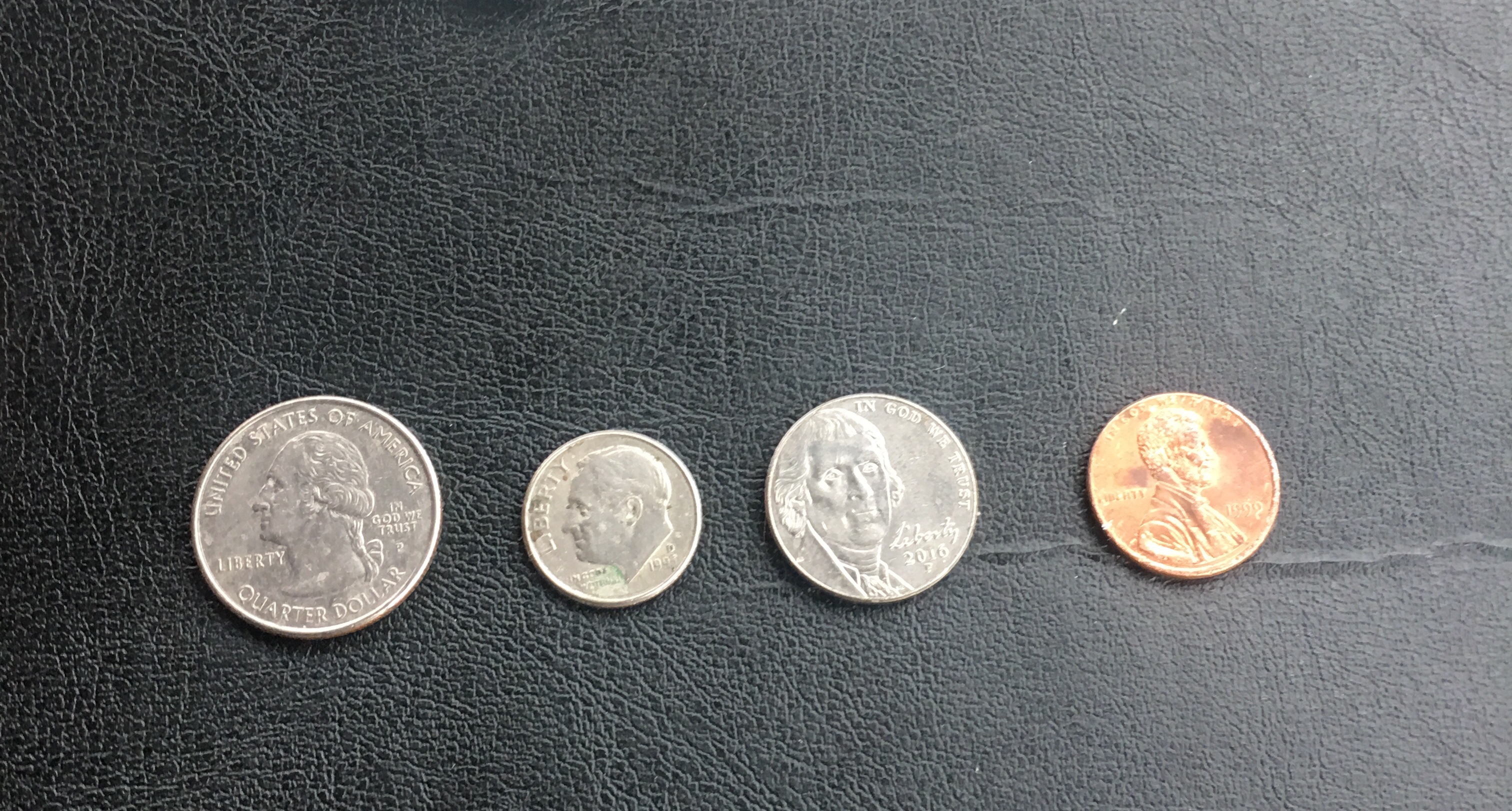 Note the only brown coin, the American Penny on which the image of 16th President, Abraham Lincoln, the President who abolished slavery (not for the good of the Slaves), is of the least value and up until 2006, it was the only standard American coin with the President facing right (it technically still is because our current nickel has President Jefferson facing forward). I think this small concept speaks volumes to the way Black people are viewed as a whole. Let’s continue.
It’s been said that the United States President holds the most powerful position in the world, and that was no secret to John Hanson, ever heard of him? Not many have…the History Channel introduces him as “John Hanson, So Called First President” and further explains that he was indeed “…the first president of the Continental Congress under the Articles of Confederation” and “sometimes called the first president of the United States, but this is a misnomer, since the presidency did not exist as an executive position separate from Congress until the Federal Constitution created the role…in 1789″ (http://www.history.com/this-day-in-history/john-hanson-so-called-first-president-dies).So from this, I gather he was a Black man serving as the then unclearly defined role of what would now be considered POTUS! 2016 was a major year in politics for a number of reasons including Hilary Clinton, but it’s a wonder why Shirley Chisholm didn’t come up more. Who’s Shirley Chisholm some may ask; unfortunately, she does not get the recognition she deserves considering not only was she the first African American woman to be elected to the United Sates Congress, but she was also the first woman and African American to run for a major party nomination (Democratic) for Presidential candidacy; one of the most kick ass parts: “Unbought and Unbossed” was emblazoned upon her campaigning posers! Find out more about her here:http://www.pbs.org/pov/chisholm/
It is true the Black History Month is the shortest month of the year, but it’s also the raddest and the most important reason is because all the things Black History represents. Believe it or not, Black History Month being the shortest month of the year is not a conspiracy, it’s because it evolved from “Negro History Week,” created in 1926 until it became the entire month of February in 1976 (that was 100 years ago 3 years ago!!). One of the most beautiful things about Black History is that it’s EVERYBODY’S history and if you don’t know that to be a fact, research equals growth. Luckily in the presence of vast regression there has been evidence of vast progression from former President Obama to Mary Esther Were. Who Is Mary Esther Were? Only the first Kenyan woman to EVER place in the finals for Miss Universe (2017), and if you watch this 44 second video of her, you will know exactly why she is an inspiration to us all and while you’re at it, check out these pictures of Black Beauties in 1920s-1940s America; eh, you may as well enlighten your perception of Africa by seeing the Africa we don’t see in the media too! Black History, it’s a curious concept as Colonialism is considered the reason for cultural appropriation. It’s crazy to think about iconic Betty Boop as Marilyn Monroe when it’s uncommon knowledge that Betty was in fact the likeness of Esther Jones, a Harlem Cotton Club regular, find out more here: Of course Jack Daniels is equally mentionable based on fact that has recently come to light: Nathan “Nearest” Green, a Black slave, is the originator of the beloved Jack Daniels Whisky as explained in this NY Times article:
It is the oppression and underrepresentation from which Black Activist movements form. The term “Black Lives Matter,” should not even be a debate, and the organization by no means places quantitate values on lives. Movements like the Black Panther Movement of Brazil, the world-wide Natural Hair Movement, Afro-Cuban Beauty Movement and the first ever Cuban Natural Hair Pageant, let’s include Miss France 2016, Arena de Montpellier, with her Beautiful Blackness and Natural hair glory; we can even bring that back stateside with ALL the Black Magic of the 2016 Olympic Games and Miss USA 2016, Deshauna Barber, a Dark Beauty, are all needed and used as a tool of unity and understanding; they do not stand to undermine of offend, but they are necessary and it’s our business.
Business…about that…I will conclude with a few thoughts and suggestions regarding Black Business, and I hope my Black List inspires you to agree that February’s Black History fanfare is much needed, appreciated, and DESERVED.
“Black Communities flourishing in the 1920, a generation after slavery”
“The History the Slaveholders Wanted Us to Forget”
“How Black Money is Converted into White Money”
“Here Are 11 Trump-Supporting Companies You Need to Boycott”
“Black Farmers to Buy from Instead of Whole Foods”
“17 Amazing Subscription Boxes for Women of Color”
A Lesson in HIS-tory
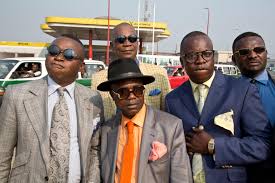
It has been proven time and time again that history repeats itself. Although many may disagree, fashion is also included in history; trends reappear every few decades. Unfortunately, Americans are known for lacking in the fashion department, and we are stereotyped as “dressing for comfort.” I will never forget when my native French teacher once explained the difference between American and French women to the class. Her notion was that American women are more concerned with quantity as opposed to French women who have the main concern of quality over quantity. She also went on to say that while American businesswomen change into sneakers on their lunch breaks, one would never find a European woman doing such.

SN: As a legit fashionista, I was COMPLETELY offended; therefore, I made it a POINT to show up to class fresh everyday!
I have no clue when this unfortunate stereotype of Americans happened; the Italians have their shoes, the Spanish have their leather, the French, well the French are the ORIGINATORS of everything fashion, and us Americans, we have…frump! While the fashion industry has proven to be pretty brutal in regards to American get-ups in the women’s department, today’s post will highlight menswear, more specifically, the Dandy.
Merriam-Webster defines the term “Dandy” as: a man who gives exaggerated attention to personal appearance, andor something excellent in its class. Back to our HIStory lesson in fashion. A little known fact about the now uber American tune, “Yankee Doodle Dandy,” is that it was originally a British tune that mocked American fashion! During the American Revolution, the British “Red Coats,” had cohesive uniforms that were actually, impeccable.

The American soldiers (mainly landowners and famers), dressed in rags and whatever their standard(s) of living could afford to them (not much). The British tune was used to describe the ill-dressed Americans. In the chant, the verse “[Yankee Doodle] stuck a feather in his head and called it Macaroni,” notes the British ridicule of Americans. You see, the term “Macaroni,” was a “dandy” Italian style of dress, very popular in England at the time. The song alludes to the notion that the unintelligent, tattered American, simply stuck a feather in his hat and thought himself to be of equal caliber. The manner in which the British used the term “Yankee,” is similar to the modern-day idea of a “country bumpkin.”

Fast forward to modern times, and the term “dandy’ is still in use. As highlighted in the CBS segment entitled, I Am Dandy: The Return of the Elegant Gentleman,” by Nathaniel Adams and Rose Callahan, “exquisite gentleman,” or men with the dandy lifestyle exude “personal elegance.” The segment further explains “dandyism” by noting it’s originator. The Godfather of men’s fashion himself, British socialite Beau Brummell, established men’s fashion-his signature creation was the suit, worn with a necktie at all times, of course. Dandy men understand and often practice Brummell’s idea of spending at least five hours getting ready, striving for a refined appearance. As a firm believer that chivalry has basically diminished in general, I appreciate the dandy men, as chivalry is a way of life for these eccentrics. Gentlemen, dandy or not, are always a nice find, something like a rare gem.

As for the anthem, “Yankee Doodle Dandy,” eventually Americans came to appropriate the jingle; making it theirs, resulting in it actually being an insult to the British creators. It is my belief that this appropriation inevitably led to Americans being comfortable with being known for comfort (smh).
I am writing this post as a shout out to those dandy men; keep on stuntin because what is style without self expression anyways? In the words of Steve Madden, “Sidewalks are my runways;” I love a man that practices the notion, and uses everyday life as a fashion opportunity! Everyone knows I’m a sucker for style; you would never catch me in sneakers on my break, and I have to give MAJOR props to men that appreciate personal style. While Americans may be known for comfort, it is absolutely refreshing to witness those escaping the shackles of the awful stereotype. This is my thank you for being “different.”
References
“Dandy.” Merriam-Webster Dictionary Collegiate Dictionary, Edition. 2000. http://www.merriam-webster.com. 3 June 2014.
“The Dandy: Celebrating the Exquisite Gentleman.” CBS Sunday Morning. CBS Interactive Inc., New York. 15 June 2014.
 A Blakward Perspective...